The Chinese idiom 内有乾坤 — “within lies heaven and earth” — describes something that holds far more than what appears on the surface. It speaks of hidden depth, of unseen complexity, of worlds waiting to be discovered.
To understand this phrase is to understand its two key elements: 乾 and 坤.
In classical Chinese thought, particularly in the I Ching, 乾 (Qián) represents the heavens — the creative force, constant motion, and unyielding strength. It is dynamic, active, and ever-expanding.
In contrast, 坤 (Kūn) represents the earth — receptive, grounding, and enduring. It is quiet yet powerful, providing balance and form to the force of heaven.
Together, 乾坤 forms the essence of the universe — a complete and harmonious whole.
And yet, the idiom reminds us: this vast universe can exist within.
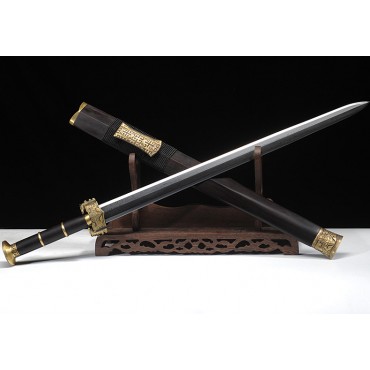
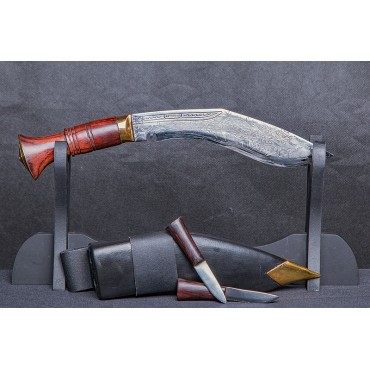
This philosophy finds a natural parallel in the world of swords.
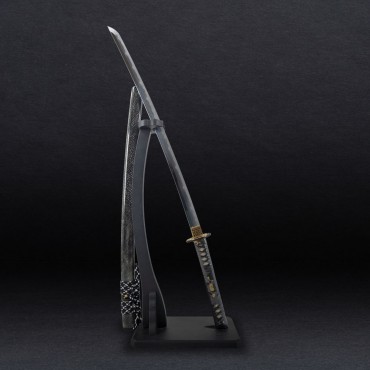
A blade at rest may seem simple. Its scabbard unassuming, its form restrained. But to judge it by appearance alone is to miss its true nature.
For within, there is far more.
The moment a sword is unsheathed, its hidden world begins to reveal itself. The flowing grain of folded steel. The subtle temper line shaped by fire and skill. The motifs carved into its fittings — each symbol carrying history, belief, and intention.
Even the balance in hand tells a story — one shaped by centuries of refinement.
In this way, every sword embodies 内有乾坤.
It is not merely an object, but a convergence of craft and culture. A quiet exterior that holds within it a universe of meaning.
Perhaps that is where its true allure lies — not in what is immediately seen, but in what is waiting to be discovered.
.jpg)
.jpg)
.jpg)
.jpg)
.jpg)
.jpg)



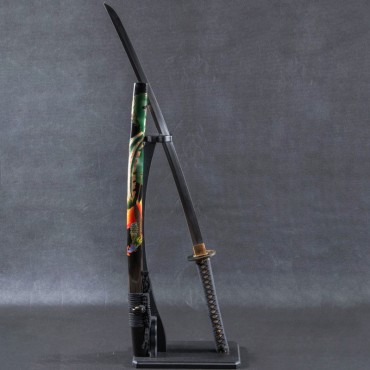

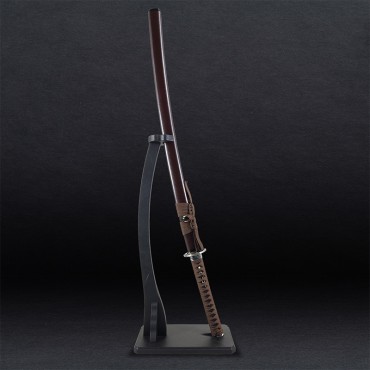
![[PRE-ORDER] Rengo (連合) Katana](https://www.caesars.com.sg/26550-home_default/rengo.jpg)