The Neglected Treasure of the History; the KHAKI or DESERT kukri of the British Gorkhas..
A legendary kukri from the glorious history of the Gurkhas but neglected and overlooked (forgotten) perhaps due to ignorance and less research. Widely used in the desert land of the western frontiers, Khaki or the Desert issue kukri faced many military actions and battle honors that set this kukri and the Gurkhas stand out from the herd.. It's a true utility knife and personal weapon at the same time.
The excessive study and research by KHHI and the historic documentations support to the fact that in the early and mid years of 20th century Gurkha Soldiers were also probably issued with kukris camouflaged by “khaki” (olive yellow canvas) fabric for various operations/campaigns at different places. Now, reproduced here as the “Khaki Issue” to represent it; the Khaki version of the historic war-battle kukri by KHHI Nepal.
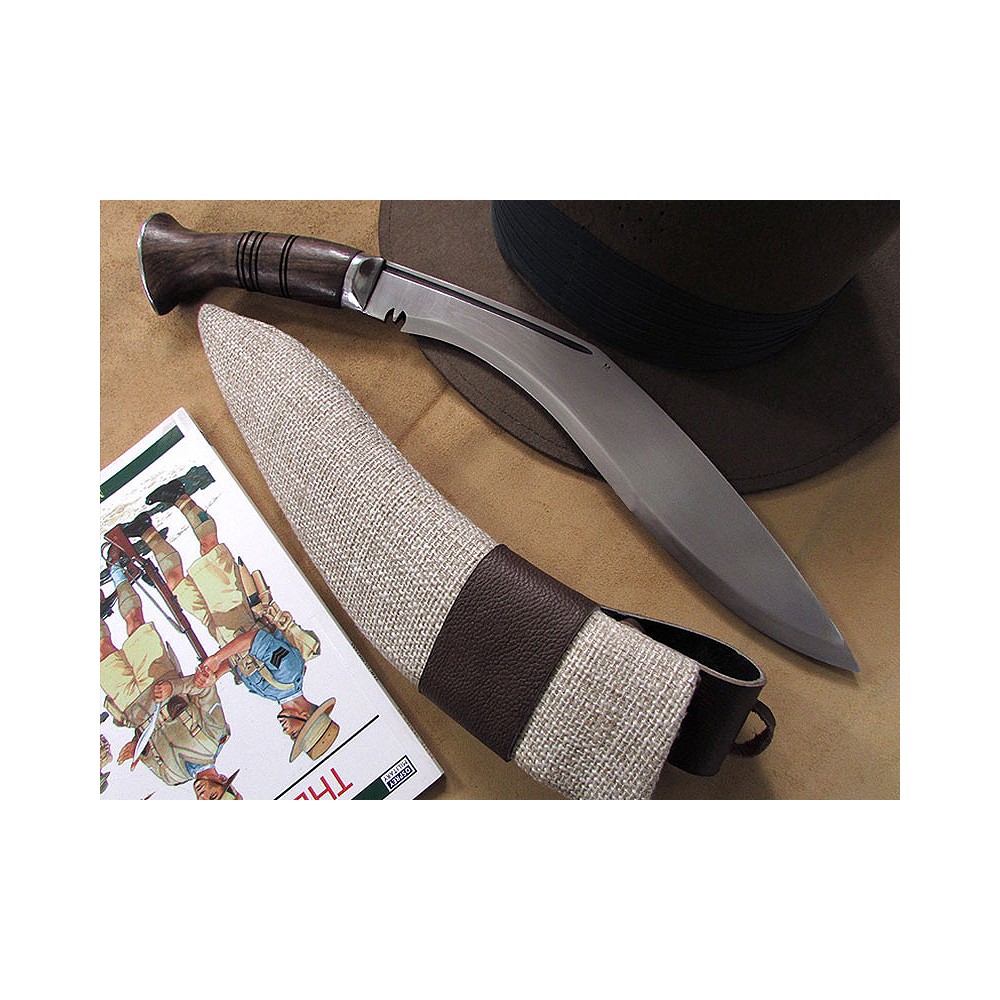
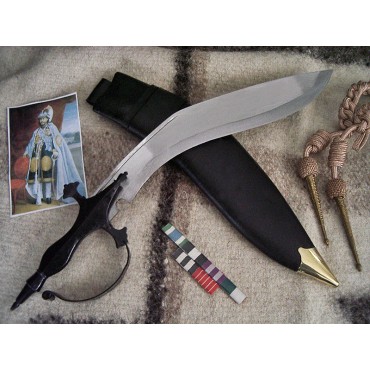
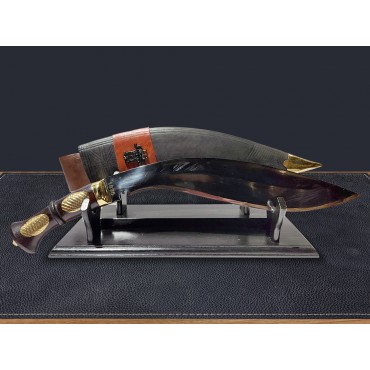
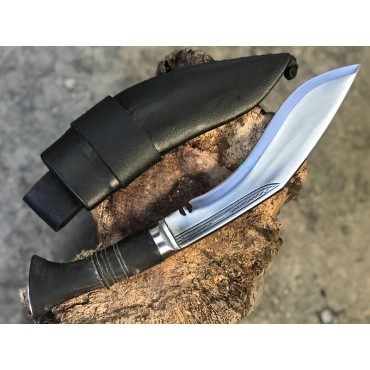
The distinctive part of this khukuri is its 'Khaki' fabric used in the scabbard/ sheath. Gorkha (Gurkha) soldiers covered the leather sheath (black most of the time) by a rough fabric like sack in khaki color (pale yellow) to blend their kukri knife with the surrounding of the terrains and to also camouflage it with the wears and gears he owns. The sole purpose was to match the complete set and avoid any unwanted attention. The fabric also well protected the sheath and in return soldier had a lasting kukri in hand.
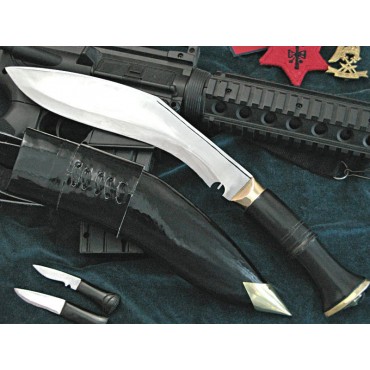
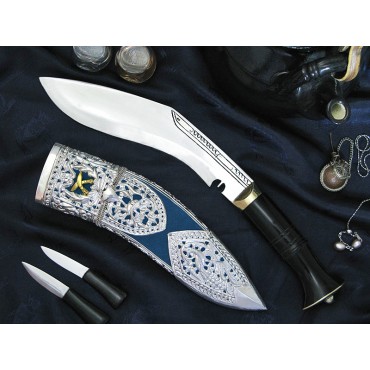
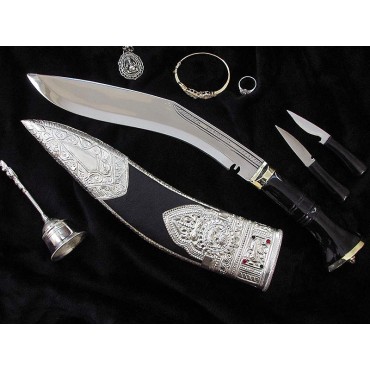
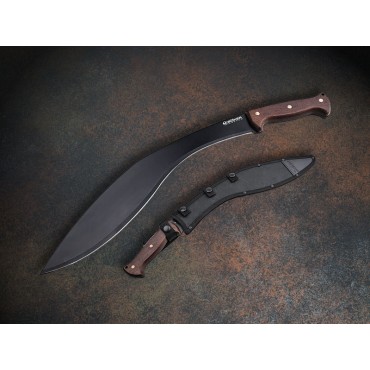
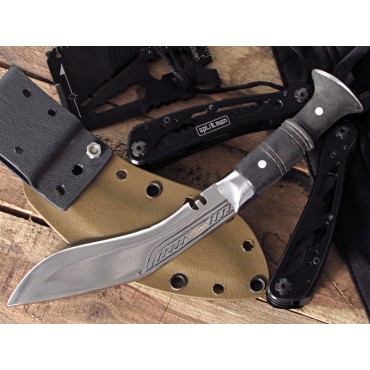
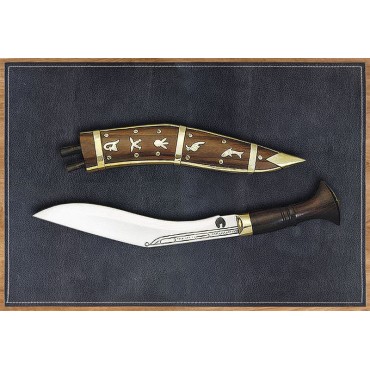
The blade’s shape is very different from the other issue models. Its little slender, has pointed profile, steep peak and very less pronounced chest as seen in the photo. The shape is fairly curved with the upper shoulder coming down from the peak quite steeply. It has a curved wooden handle with steel fixtures having stick tang hidden inside. The bottom inward cured handle makes the holding very ease and effective. Two accompanying knives (Karda and Chakmak) are not included.
It is believed that in 1930’s the practice of covering the kukri scabbard with khaki cloth appears to stem from about this time when Gurkhas were called upon to secure the North-West frontier, an area rarely at peace. However our research also points to the fact that it started much earlier in 1915 when Gurkhas were deployed in the Middle East during 1st world war. Similarly the practice/issue also followed in the outbreak of 2nd world war in series of operations when Gurkhas landed for the North African campaign in 1940-43 and in Sicily and Italy in 1944-45. Likewise the Khaki and sometimes Green army fabric version, of the World War kukri continued in 1945 when Gurkhas played a crucial role in containing the Japanese invasions and also in regaining the lost territories in the Far East during the 2nd World War. This practice initiated when Gurkhas adopted themselves to best suit the environment, surroundings and to perfectly cope with the places to maximize their output. The total uniform/outfit was replaced by khaki in the above mentioned fronts and so was the kukri, to camouflage from the enemies’ eyes.
Specifications
Blade Size (in): 12
Handle Size (in): 4.50
Handle Material: Rosewood
Actual Weight (gm): 615
Overall weight (gm): 825
Shipping weight (gm): 1175
Blade finishing: Unpolished
Blade sharpness: Standard (very sharp)
Blade material: 5160
Accompanying knives/B-up: None
Blade thickness (mm): 7
Handle finishing: Polish
Sheath: Black leather covered by cream colored cloth
Tang type: Stick
Fixture: Iron
Edge grinding: Semi convex
Edge Hardness: 55-57 hrc
Blade (panel) Grinding: Full Flat
Function: Attacking, Gift, Military, Fighting, Outdoor, Combat, Collection, Regular Work
Read moreShow less