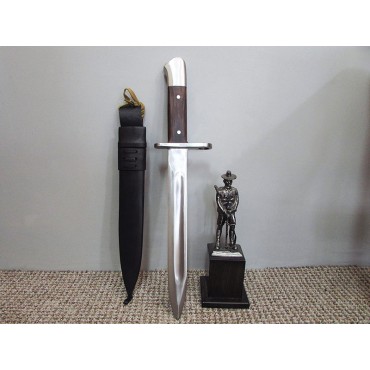
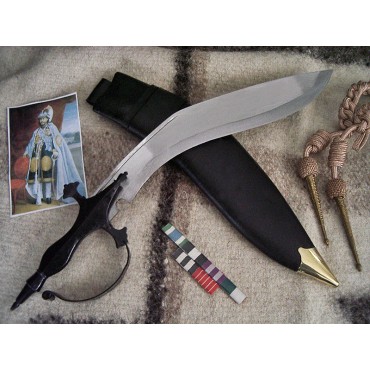
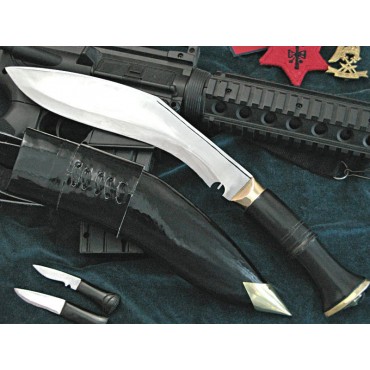
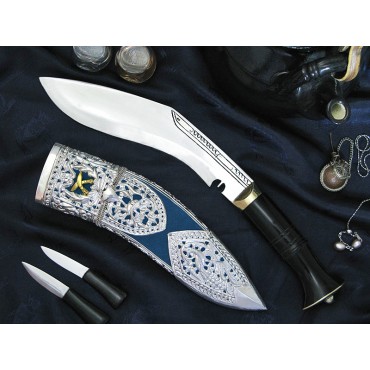
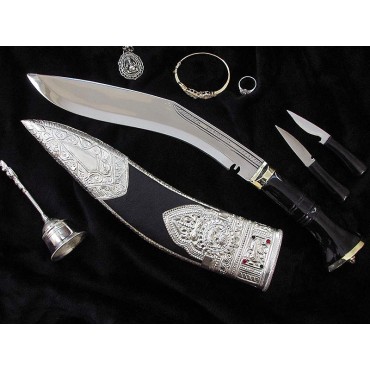
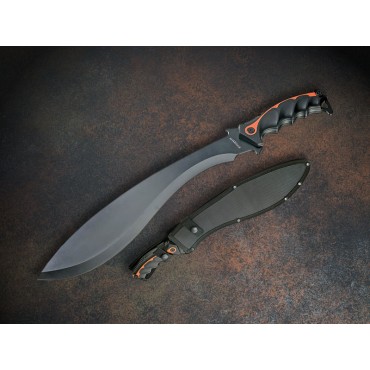
Its issuance commenced after the Indian mutiny in ca 1859-60; played its part in the history and development of British, India, Nepal and Gurkhas..
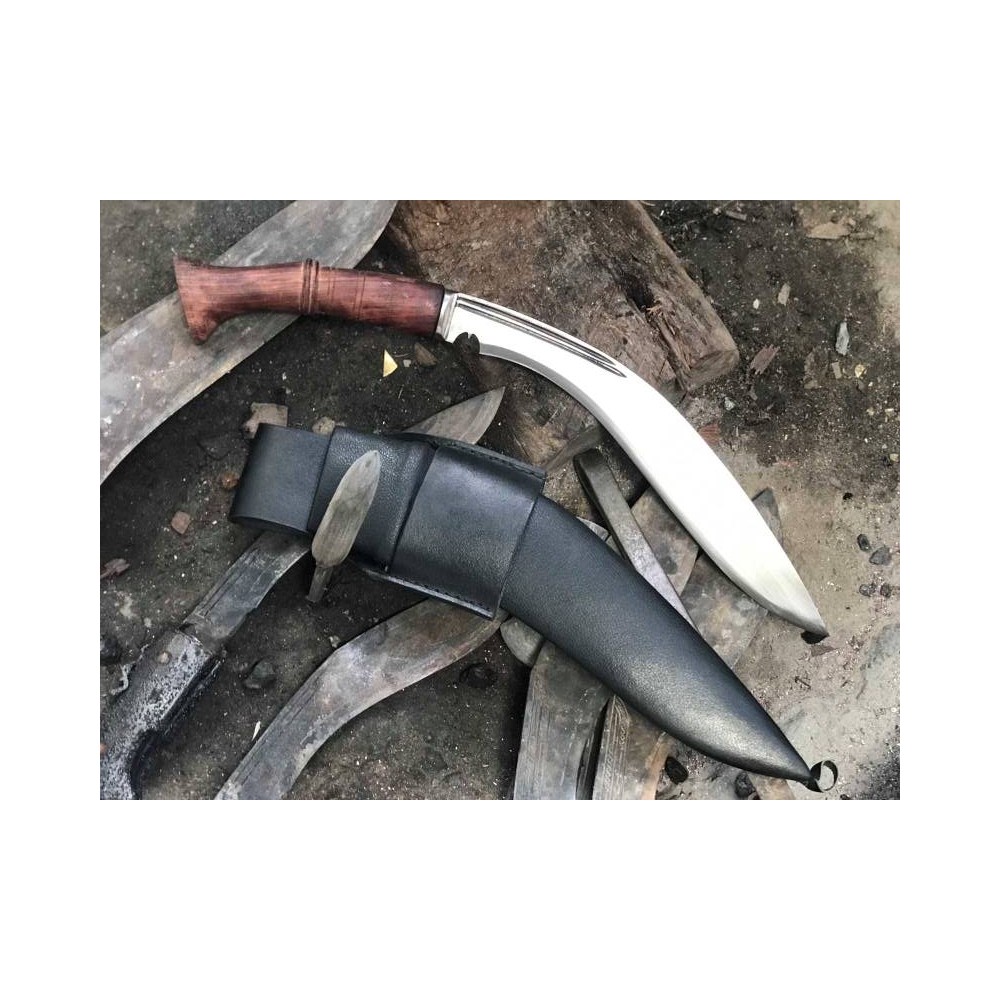
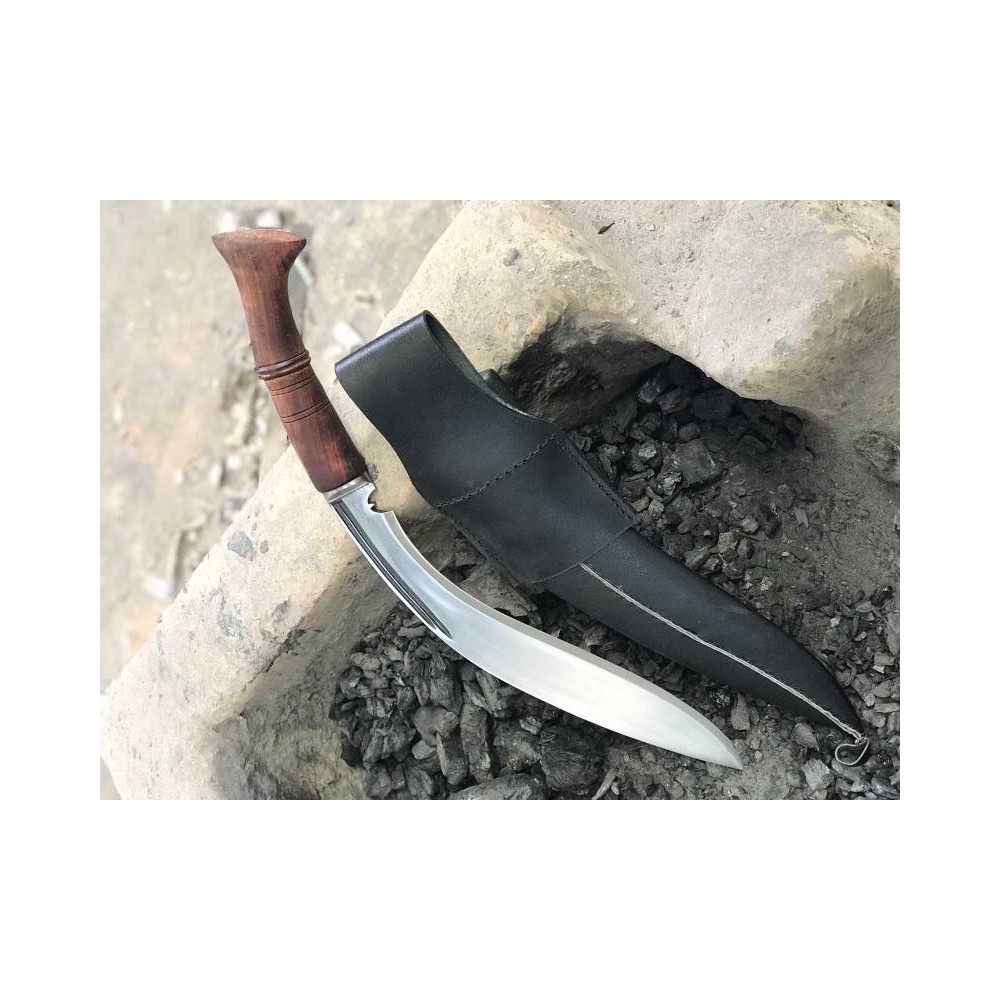
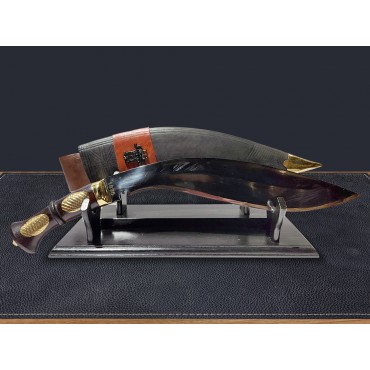
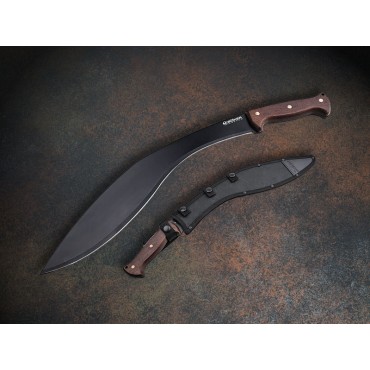
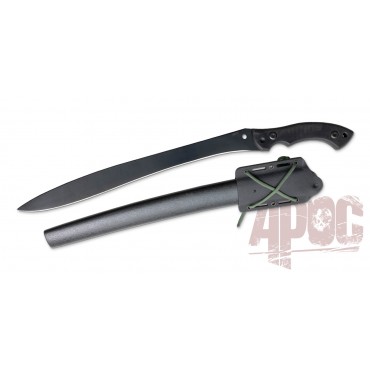
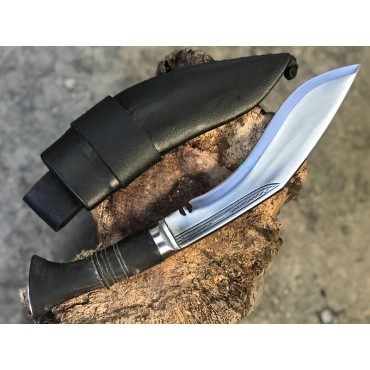
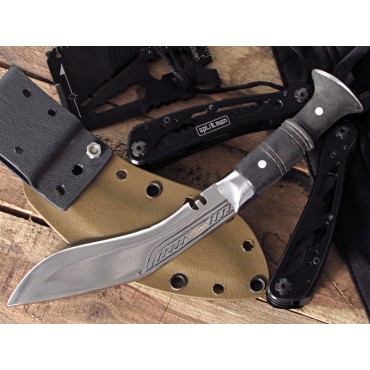
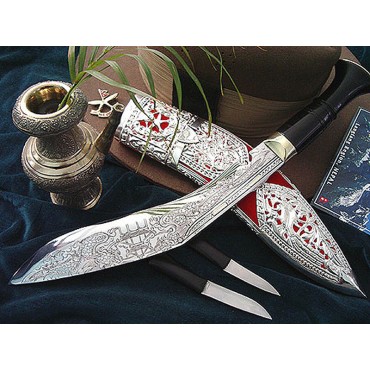
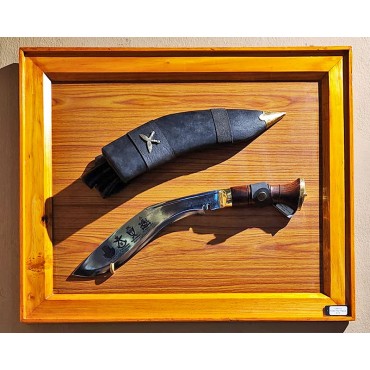
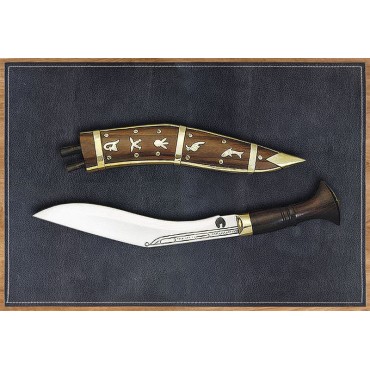
The shape is typical having the blade profile on the slender side. It is a heavy curved blade having no shoulder (peak) or breakpoint in the spine. It has a full flat panel forged from spine to edge and then the cutting edge is hammered out. The handle is also typical but quite long compared to the blade’s ratio. It was probably intended for double-hand use if needed when it was first designed. It also gives a good counterbalance while using. The tang is half tang but goes almost till the end (butt) of the handle. It has total unpolished finishing. It has a regular scabbard but a unique frog (see images). No rivets are used but sewn on both sides to fix to the body and then folded and sewn again to make a loop.
This kukri is a war machine that has a proven history of defeating its enemies. It has always been victorious. On the other hand, it is also a very useful cutting knife be it at home or around or away. Gurkhas are mainly farmers and hunters hence they highly depend on their tools and their kukris have never let them down.
Specifications
Blade Size (in): 13
Handle Size (in): 6
Handle Material: Rosewood
Actual Weight (gm): 575
Overall weight (gm): 800
Shipping weight (gm): 1300
Blade finishing: Unpolished
Blade sharpness: Standard (very sharp)
Blade material: 5160
Accompanying knives/B-up: None
Blade thickness (mm): 7
Handle finishing: Unpolished
Sheath: Water buffalo leather
Tang type: Half
Fixture: Iron
Edge grinding: Convex
Edge Hardness: 55-57HRC
Blade (panel) Grinding: Full Flat
Read moreShow less